Skip to content
minShelfminShelf.com
GroupsFeedHomeAI-dentifyFeedback
Recrystallized Carbonate with Azurite & Chalcopyrite Mineralisation (CRD) - minShelf
Recrystallized Carbonate with Azurite & Chalcopyrite Mineralisation (CRD)
J
@jcg

Jcg·18 Jun 2026

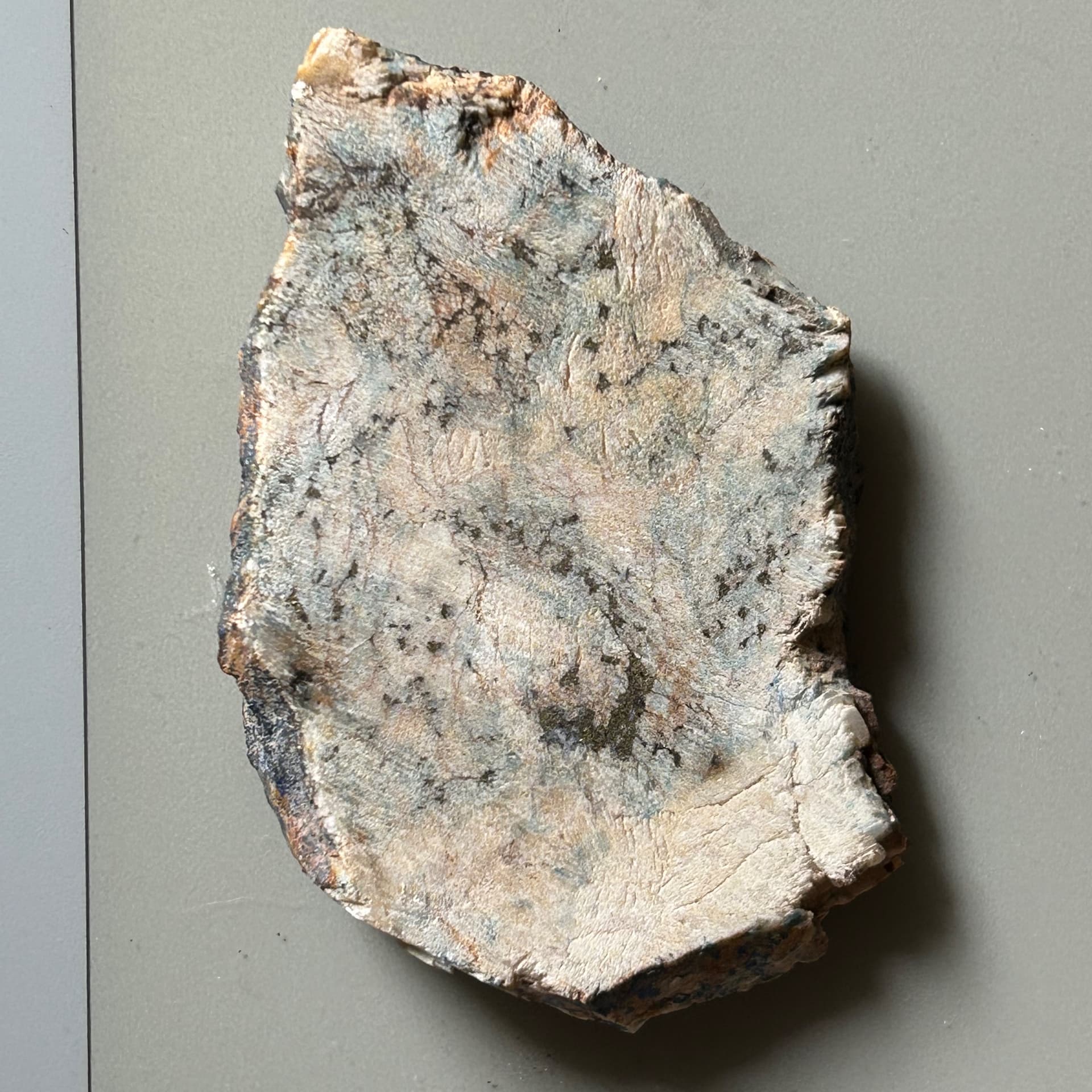
Recrystallized Carbonate with Azurite & Chalcopyrite Mineralisation (CRD)

AI-suggested ID

Junín, Peru

The collector's interpretation is well-reasoned and consistent with what is visible. The blue-grey patches are likely azurite (possibly partly converted to malachite), dark specks suggest chalcopyrite/pyrite, and the dull silky host is recrystallised carbonate. A streak and acid test would confirm the carbonate host; a fresh face under magnification would help identify sulphide phases.

oreSkarn

Formation

Carbonate Replacement Deposit (CRD): hydrothermal fluids from intrusive sources replace limestone/dolomite with sulphide and oxide copper minerals; oxidation of primary chalcopyrite produces secondary azurite/malachite in the supergene zone.

Geological origin

Huancayo / Junín Region, Central Peru

Properties

color

pale grey-blue with dark specks

grade

Unknown — specimen-grade, likely low-grade oxidised zone

gangue

Calcite, dolomite, iron oxides

commodity

Copper (Cu), potential silver (Ag)

host rock

Recrystallised limestone / dolomite (carbonate)

alteration

Propylitic

Where else to find

Cerro de Pasco, PeruMorococha, PeruCasapalca, PeruSanta Eulalia, Chihuahua, MexicoBisbee, Arizona, USABroken Hill, New South Wales, Australia

Suggested tests

  • • Apply dilute HCl (10%): strong effervescence confirms calcite/dolomite carbonate host
  • • Perform streak on unglazed porcelain: azurite gives pale blue streak; malachite gives pale green
  • • Examine dark metallic grains under hand lens for brass-yellow (chalcopyrite) vs brassy-iridescent tarnish (bornite) vs silver-grey (galena)
  • • UV fluorescence test: calcite often fluoresces red/orange, distinguishing it from dolomite (cream/white)

Could also be

Malachite-stained Limestone - The pale blue-green patchy colouration could be malachite rather than azurite, both being copper carbonates common in CRD oxidised zones; malachite tends greener but can look blue-grey on weathered surfaces
Skarn with Copper Sulphide Mineralisation - CRD systems in the central Andes frequently grade into skarn-style alteration; the dark metallic specks could be chalcopyrite or pyrite in a calc-silicate groundmass rather than a pure carbonate host
Argentiferous Oxidised Zone Gossan - Peruvian CRD deposits (e.g. Cerro de Pasco belt) commonly carry Ag-bearing gossan with iron-stained carbonate and secondary copper minerals that present a very similar weathered appearance
copper-ore-extractioazurite-historicallyspecimen-display-matgeological-indicator
0

Comments (0)